Racing Spring: Determined Flowers and Tiny Gardeners
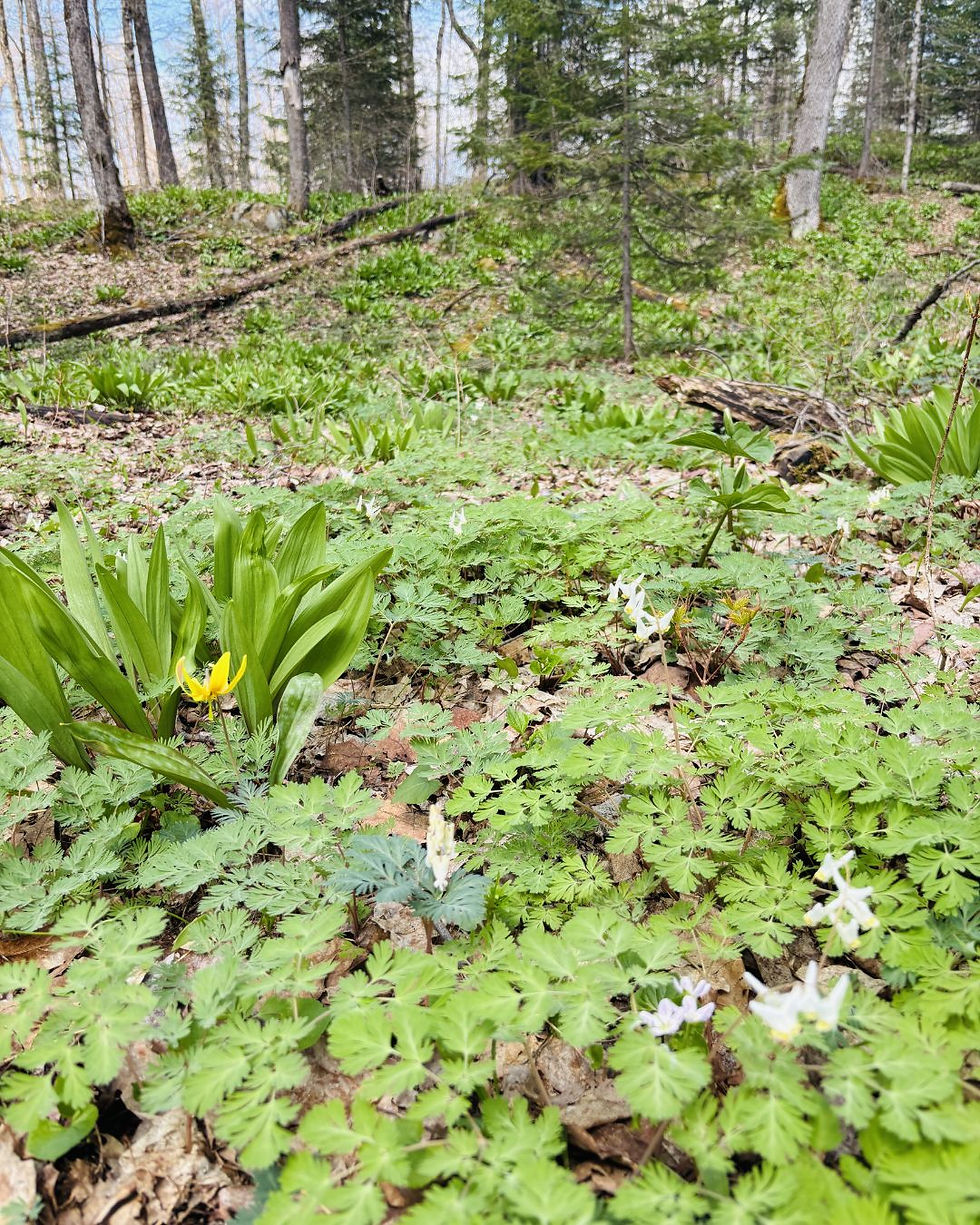
On those gray, early-spring days when lawns are brown and the world feels dull, the forest offers an instant pick-me-up. Everywhere you look, a carpet of green unfurls, punctuated by cheerful bursts of yellow, white, red, and purple ephemeral flowers racing to bloom before the canopy closes.

A fleeting moment
Spring ephemerals are perennial plants that thrive in the forest understory. Their lifecycles are fast and strategic as they must emerge, bloom, and set seed before the trees above leaf out and shade the forest floor. While the word “ephemeral” might be new to some, many of these flowers, like the iconic white trillium, are already familiar to Ontario forest visitors.
Race against time
Behind each delicate flower lies a fascinating strategy that lets ephemerals grow, bloom, and retreat in the span of just a few short weeks.
Outsmarting unpredictable weather
With natural antifreeze compounds and the ability to survive being partially frozen, many ephemerals can weather frosty nights and bounce back as soon as the sun returns.
Underground energy stores
Many plants store energy in bulbs, tubers, or rhizomes, allowing them to rapidly grow as soon as weather conditions permit.
Ant-powered seed dispersal
Many spring ephemerals have a secret weapon for spreading their seeds: a sweet, fatty coating called an elaiosome that’s an irresistible ant snack. Ants carry seeds to their nest, nibble off the treat, and then discard the leftover seeds in nutrient-rich soil. Voila! Planting done—courtesy of nature’s tiniest gardeners.
Pollinator Appeal
By flowering early, spring ephemerals face less competition for pollinators-a clever strategy when every sunny morning counts. Some species even give off scents reminiscent of rotten meat or wet dogs. Gross to us but irresistible to carrion flies and beetles!
Trails to Wander
Our forested trails offer the perfect opportunity to spot these delicate spring flowers in their natural habitat. While every trail has its charm, the Back Forty Shorty Trail is especially breathtaking in May, with viewpoints showcasing red and white trilliums, Dutchman’s breeches, spring beauty, large-flowered bellwort, Jack-in-the-pulpit, yellow trout lily, and more. Enjoy the walk, and don’t forget your bug net!

Cara Steele, Ecologist
Abbey Gardens