
From Garlic to Flowers: Making the Most of Our Drying Shed

At Abbey Gardens, we’re fortunate to have a purpose-built shed for drying the garlic we grow and harvest each year. While its original purpose is to carefully cure our garlic crop, we’ve discovered that this special space can be put to work throughout much more of the year.
The Perfect Place to Dry Garlic
Garlic needs the right conditions to dry properly. Our drying shed keeps the bulbs out of direct sunlight while allowing plenty of air to circulate around the produce. This helps prevent moisture from clinging to the bulbs, reducing the risk of mold and rot.
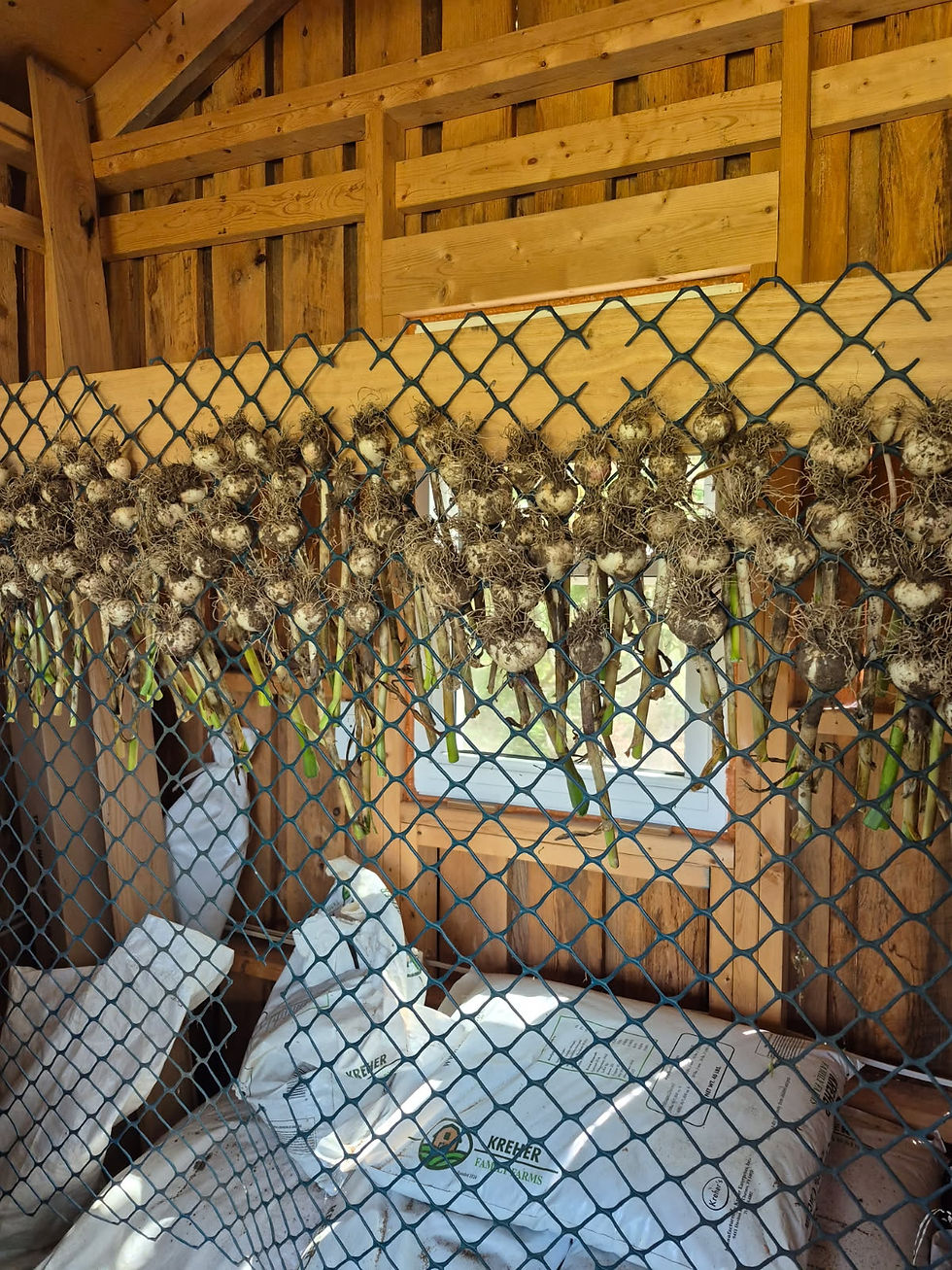
Each bulb gets the time and airflow it needs to dry thoroughly, helping us preserve the harvest and prepare it for use in the Hub’s kitchen.
Once the garlic is completely dry, it needs to be peeled before our kitchen staff can use it in the many wonderful edible products available for visitors to purchase and enjoy at home. This year, we were lucky to have a terrific group of visitor volunteers help peel our garlic on the front porch. Their caring hands added yet another layer of community to the creation of our products!
From Garlic to Herbs and Flowers
Our garlic is harvested in mid-August and hangs in the drying shed for only a few weeks. That means the shed has an important job for a short period of the year, but sits mostly empty during the months that follow.
So, why not make better use of the space?
We’ve begun using the drying shed to dry fresh herbs and a beautiful selection of flowers gathered by hand from our gardens.
Among the herbs we’re currently drying are:
Oregano
Lavender
Marjoram
Bergamot
Sage
Lemon balm
Chamomile
Basil
Borage
Thyme
Savoury
Dill
Several varieties of mint

And with an abundance of annual and perennial flowers growing throughout our gardens, we have plenty of beautiful plant material to work with. Roses, coneflowers, sea holly, yarrow, Artemisia, hydrangea, larkspur, sunflower heads, dusty miller, strawflower, amaranth, and many more varieties are being collected for use in the Hub and in upcoming workshops.
It’s wonderful to see these plants continue to have a purpose long after their time in the garden has passed.
You Don’t Need a Drying Shed
While we’re fortunate to have this dedicated space at Abbey Gardens, a purpose-built drying shed certainly isn’t necessary for preserving herbs and flowers at home.
A shelf, a few wall hooks, or even an old window screen can work beautifully. The most important things are to keep your plant material out of direct sunlight and provide good air circulation.
Herbs and flowers can be hung in small bunches or laid flat to dry. In many cases, a few weeks is all that’s needed to properly preserve them.
So, look around your home, shed, garage, or other suitable space. You may already have everything you need.

A Little Taste of Summer All Winter Long
There’s something particularly satisfying about using herbs that you grew and preserved yourself.
Try adding dried herbs to a favourite tea and enjoy a little taste of summer on a snowy winter day. Use them in your favourite recipes, where they can add flavour and character to all kinds of dishes.
And there’s an added pleasure in knowing that the ingredients you’re eating were grown by your own hands.
Bringing the Garden Indoors
Dried flowers offer an entirely different kind of creative opportunity.
Some can be pressed to create personal note cards, artwork, or pictures. Others can be arranged in countless ways and used in floral displays, wreaths, kindling bundles, topiary, and other decorative projects.
These simple activities can also be wonderfully relaxing. Working with dried flowers brings back memories of time spent in the garden—the colours, scents, textures, birdsong, and the satisfaction of nurturing something from seed or seedling into bloom.
There is something deeply rewarding about caring for a plant, harvesting it, and then finding a new purpose for it.
Gardens offer us so many sensory experiences, and drying herbs and flowers allows us to carry some of those experiences with us long after the growing season has ended.
Come Explore Abbey Gardens

We invite you to come wander the three hundred acres of Abbey Gardens. While you’re here, take a look at our drying shed and learn more about how we grow and harvest garlic, as well as the techniques we use to dry herbs and flowers for both practical and decorative purposes.
We’re always happy to chat, share what we’ve learned, and talk gardens with our visitors.
There’s always something growing, drying, creating, or inspiring at Abbey Gardens!
Karen Sloan
Abbey Gardens Gardener


